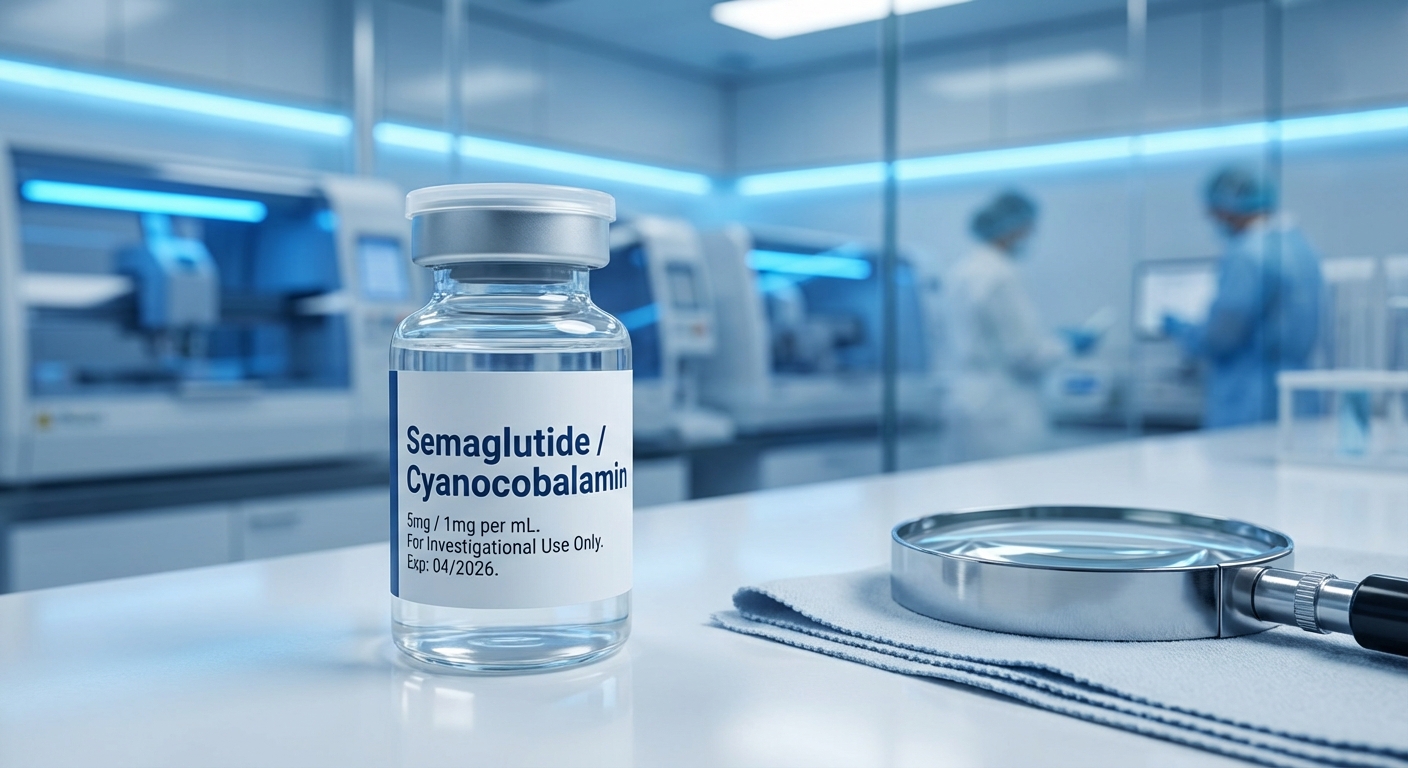
If you’ve recently renewed your prescription for compounded Semaglutide, you might have noticed a subtle but significant change on the label. Instead of just "Semaglutide Injection," your vial might now read "Semaglutide / Cyanocobalamin" or "Semaglutide / Glycine."
You aren't alone. In 2026, the landscape of medical weight loss has shifted dramatically. With the FDA declaring the "official" resolution of the Semaglutide shortage back in early 2025, the regulatory floodgates opened. The "Federal exemptions" that allowed pharmacies to mass-produce copies of Ozempic® and Wegovy® have expired.
To survive the "FDA Cliff," legitimate telehealth providers and 503A pharmacies have pivoted to customized formulations. But is adding Vitamin B12 just a legal loophole to bypass the "Essentially a Copy" rule, or does it actually offer a medical benefit? And more importantly—is it safe?
As your forensic guide to the GLP-1 market, we are peeling back the layers of FDA regulations to explain exactly what is in your syringe and why.
The "FDA Cliff": Why Pure Compounded Semaglutide Disappeared
To understand the rise of B12 blends, you have to understand the Drug Shortage Loophole.
Under Section 503A of the Federal Food, Drug, and Cosmetic Act, compounding pharmacies are generally prohibited from making drugs that are "essentially a copy" of a commercially available, FDA-approved drug (like Ozempic®). The logic is simple: if you can buy the real thing at CVS, the FDA doesn't want a pharmacy making a generic version in a lab without going through the billion-dollar approval process.
However, there is an exception. When a drug appears on the FDA Drug Shortage List, it is not considered "commercially available". From 2022 through early 2025, this allowed pharmacies to compound "pure" Semaglutide base legally.
But in February 2025, the FDA declared the Semaglutide shortage resolved. This triggered a countdown:
- 503A Pharmacies (Patient-Specific): Had to stop making "copies" by April 2025.
- 503B Outsourcing Facilities (Bulk): Had to stop by May 2025.
Once those dates passed, selling "generic Ozempic" became illegal for compounders unless they could prove they were creating a significant difference for the patient.
Enter the "B12 Loophole": Medical Innovation or Legal Shield?
With the shortage exemption gone, pharmacies needed a way to continue serving the millions of patients who couldn't afford the $1,000+ brand-name price tag. The solution? Customization.
By adding an active ingredient like Cyanocobalamin (Vitamin B12) or Glycine, pharmacies argue they are no longer creating a "copy" of Wegovy®. Instead, they are creating a unique, tailored medication that doesn't exist commercially.
The Legal Argument
The argument is that the combination therapy offers a clinical advantage. For example, B12 is often cited to help with the fatigue associated with low-calorie diets, while Glycine may help with muscle preservation or tolerability.
The FDA's Stance
This is where it gets "grey." The FDA has stated that simply adding a bulk substance (like B12) to a commercial drug copy does not automatically exempt it from the "essentially a copy" rule unless the prescribing doctor documents a specific medical reason why the patient needs that specific combination.
This places the burden on the telehealth provider. When you fill out your intake quiz on platforms like OrderlyMeds or Clinic Secret, you may notice questions specifically asking about fatigue, nausea, or vitamin deficiency. This data allows the provider to legally justify prescribing a "customized" B12 blend for you, satisfying the FDA's documentation requirement.
Safety Analysis: Is Semaglutide + B12 Safe?
Putting the legal chess match aside, is the medication safe? Generally, yes—but only if sourced correctly.
The "Cocktail" Verdict:
Combining Semaglutide with Vitamin B12 is a common practice in integrative medicine. B12 is water-soluble, meaning your body easily flushes out excess amounts, making the risk of toxicity very low. However, the safety depends entirely on the source of the Semaglutide.
The Real Danger: "Salts" vs. "Base"
The biggest risk in 2026 isn't the B12—it's the Semaglutide itself. You must ensure your pharmacy is using Semaglutide Base, not "Semaglutide Sodium" or "Semaglutide Acetate."
- Semaglutide Base: The active pharmaceutical ingredient (API) found in FDA-approved drugs. Safe for compounding when regulations are followed.
- Semaglutide Salts (Sodium/Acetate): Modified chemical forms often sold by research chemical companies. The FDA has strictly warned against using these, as they are not biologically identical to the approved drug and have unknown safety profiles.
Red Flag Warning: If a provider sells "Semaglutide Sodium" or labels their product "For Research Only," run. Legitimate 503A pharmacies will only compound with the Base form, often combining it with B12 to comply with the new post-shortage rules.
Forensic Guide: How to Vet Your Provider in 2026
With the market flooded with "B12 Blends," how do you know who to trust? Use this checklist before you buy.
| Feature | Legit Provider (Safe) | Grey Market / Scam (Unsafe) |
|---|---|---|
| Ingredients | Semaglutide Base + Cyanocobalamin (B12) | Semaglutide Sodium, Acetate, or "Peptides" |
| Pharmacy Type | FDA-Licensed 503A or 503B | "Research Lab" or Unlicensed |
| Prescription | Requires Telehealth Consult & Medical History | "Add to Cart" (No ID/Script required) |
| Claims | "Compounded Medication" | "Generic Ozempic" (Illegal term) |
The Verdict: Should You Switch to a B12 Blend?
If you are currently priced out of brand-name GLP-1s, a compounded Semaglutide/B12 formulation from a licensed US pharmacy is likely your safest and most viable option in 2026.
While the addition of B12 is largely a strategic move to navigate the "Essentially a Copy" regulations, it does not inherently degrade the quality of the medication—provided the Semaglutide Base is used. In fact, many patients report that the B12 helps mitigate the nausea and lethargy common with GLP-1 treatment.
Our Recommendation: Stick to the major telehealth players we've vetted (like SkyRx and OrderlyMeds). They have the legal teams and pharmacy partnerships to ensure their "customized" blends meet the strict documentation requirements of the post-shortage era. Avoid the "wild west" of direct-to-consumer peptide sites that haven't updated their protocols since the shortage ended.
Disclaimer: This article is for educational purposes only and does not constitute medical or legal advice. The regulatory status of compounded medications is subject to rapid change. Always consult with a licensed healthcare provider before starting any weight loss treatment.