You’ve fought the insurance denials, you’ve navigated the telehealth maze, and you’ve finally secured a consistent supply of your GLP-1 medication. You’re seeing results. But now, a business trip or family vacation looms, and a new anxiety sets in: How do I get my medication through airport security without it being confiscated or spoiling in the heat?
Traveling with injectable medications like Semaglutide (Ozempic/Wegovy) or Tirzepatide (Mounjaro/Zepbound) requires more than just tossing a bottle into your toiletry bag. Between strict TSA liquid regulations, the physics of airplane cargo holds, and the chemical fragility of compounded peptides, a lack of preparation can be a costly mistake.
This guide is your forensic roadmap to traveling with GLP-1s in 2026, specifically tailored for patients using compounded vials and telehealth services.
The Golden Rule: Never Check Your Meds
If you take only one piece of advice from this guide, let it be this: Never, under any circumstances, place your GLP-1 medication in your checked luggage.
There are two critical reasons for this, backed by aviation physics and logistics:
- The Freezing Risk: While airplane cabins are climate-controlled, the cargo hold can experience extreme temperature fluctuations. Although many modern cargo holds are kept above freezing, they can still drop significantly, especially during loading and unloading on the tarmac in winter. If your Semaglutide freezes, the peptide structure can break down, rendering the medication ineffective or unsafe. Once a peptide has frozen, it must be discarded.
- The Lost Luggage Nightmare: In 2025, airlines mishandled millions of bags. If your luggage is delayed or lost, you aren't just missing clothes; you are missing a medically necessary treatment. Replacing a compounded prescription while out of state is nearly impossible due to state-specific telemedicine licensing laws.
TSA & Security: Navigating the "3-1-1" Exemption
Many patients panic because their ice packs are melting or their compounded vial looks like a liquid that violates the "3.4 ounce" (100ml) rule. Here is the reality of TSA regulations for medical liquids.
1. The Medical Exemption
FDA-approved medications and compounded drugs prescribed by a doctor are exempt from the standard 3-1-1 liquid rule. You are permitted to bring medically necessary liquids in quantities larger than 3.4 ounces, provided you declare them to the TSA officer at the start of the screening process.
2. The "Frozen" Ice Pack Rule
This is where travelers often get caught. TSA regulations state that ice packs or gel packs are allowed if they are frozen solid at the time of screening. If your ice pack is slushy or partially melted, it technically becomes a "liquid" and is subject to the 3-1-1 rule.
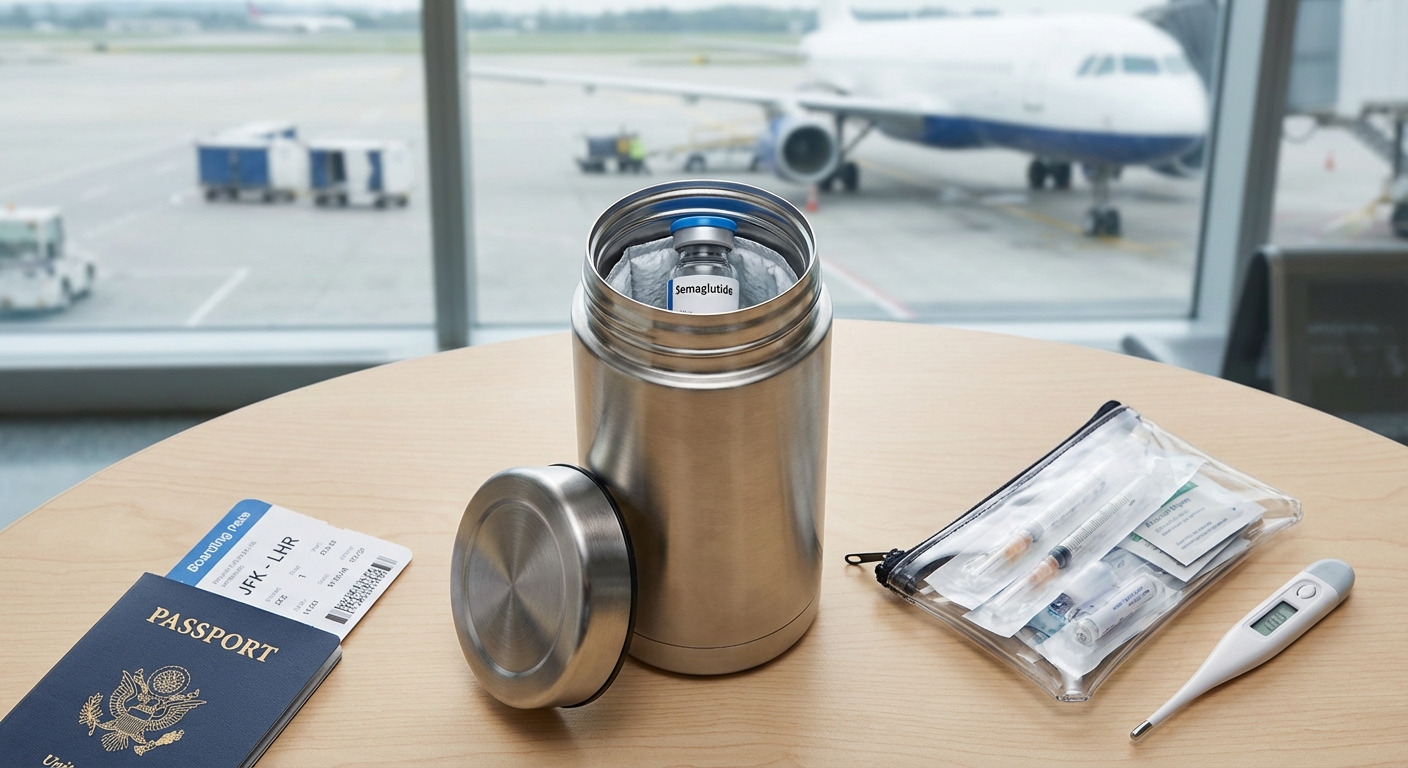
The Workaround: If your packs have melted slightly by the time you reach security, you must declare them as "medically necessary cooling accessories." TSA agents generally allow this for medication, but it triggers additional screening. To avoid the hassle, use high-performance gel packs that stay frozen longer, or use a medical travel cooler (like a Frio wallet or 4AllFamily thermos) designed specifically for this purpose.
3. X-Ray Safety
Patients often worry that X-ray scanners will damage the delicate peptide chains in Semaglutide or Tirzepatide. According to current data, X-ray machines used for carry-on luggage do not affect the potency of these medications. However, if you are uncomfortable with this, you have the right to request a manual visual inspection. Be prepared to wait longer if you choose this option.
The "Cold Chain" Crisis: Keeping Compounded Vials Stable
Unlike the branded auto-injector pens (Wegovy/Zepbound), which are often stable at room temperature for up to 21–28 days, compounded medications in vials are more sensitive.
Most compounding pharmacies recommend keeping the vial refrigerated (36°F to 46°F) at all times to prevent bacterial growth and degradation, especially once the vial has been punctured.
Best Practices for Travel Cooling:
- The Thermos Method: Use a vacuum-insulated medical thermos. These are superior to standard lunchboxes because they protect the medication from physical crushing and maintain temperature for 24–48 hours.
- The Buffer Zone: Never let the medication vial touch the ice pack directly. Direct contact can freeze the liquid, destroying the medication. Always use a buffer layer (like a cloth or the specific insert provided with medical coolers).
- Hotel Fridge Hazard: Hotel mini-fridges are notoriously unreliable. They often freeze items placed near the back cooling element or fail to cool items near the door. Pro Tip: Place a small thermometer in the fridge or keep your meds in the middle shelf, wrapped in a towel to buffer against temperature spikes.
Documentation: The "Paper Trail" Defense
When traveling with compounded medications, you lack the recognizable branding of a bright yellow Ozempic box. To a TSA agent or customs officer, a generic vial of clear liquid with a syringe can look suspicious.
You must carry the following:
- The Prescription Label: This must be attached to the medication or the box it came in. It should clearly show your name (matching your ID), the prescriber's name, and the medication name.
- Original Packaging: Do not pre-load syringes and carry them loose. This is a major red flag for security. Carry the vial and fresh, sealed syringes separately.
- Doctor’s Note (Optional but Recommended): For international travel, a letter from your telehealth provider confirming the medication is for personal medical use can prevent customs delays.
International Travel: When "Legal" Becomes "Controlled"
Traveling internationally adds a layer of complexity. While GLP-1s are generally not controlled substances like opioids or stimulants, different countries have different rules regarding importing medications.
- Japan: Strictly prohibits certain stimulant-based weight loss drugs, though GLP-1s are generally permitted. However, you are limited to a one-month supply for personal use.
- UAE (Dubai): Has extremely strict anti-drug laws. While Ozempic is widely used there, bringing in compounded unmarked vials can be risky. Always carry the original prescription and check with the embassy before flying.
- Europe: Generally lenient for personal use quantities (up to 3 months), but the "personal use" defense relies entirely on having that prescription label with your name on it.
Dosing Schedule: Handling Time Zones
If you are crossing multiple time zones, your injection "day" might shift. GLP-1 medications are forgiving; you generally have a window of flexibility.
The 2-Day Rule: If you miss your dose, you can usually take it within 5 days of the missed date. If it has been more than 5 days, skip it and resume on your next scheduled day. Do not double dose. For travel, it is often easier to keep your injection schedule on your "home time" rather than adjusting to "local time," especially for trips under two weeks.
Summary Checklist for the GLP-1 Traveler
- ✅ Carry-On Only: Medication never goes in checked bags.
- ✅ Cooling Gear: Use a medical-grade travel cooler (Frio/4AllFamily).
- ✅ Buffer: Ensure ice packs do not touch the vial directly.
- ✅ Labeling: Prescription label must be visible and match your ID.
- ✅ Supplies: Bring extra alcohol wipes and syringes (more than you think you need).
- ✅ Sharps Plan: Bring a small travel sharps container or a thick plastic bottle for used needles.
Traveling doesn't mean pausing your health journey. With the right gear and a bit of preparation, you can maintain your regimen from anywhere in the world. If you are looking for a provider that offers travel-friendly support or need to restock before a long trip, check out our Forensic Provider Comparison to find the best fit for your lifestyle.